


05 Oct Building a winter wildlife garden
Wildlife watching is never more satisfying than in winter time. Here are our tips on building a winter wildlife garden so that you have plenty of birds and mammals to bring life to your garden during the shorter, darker days of the year.
Tips For Encouraging and Supporting Wildlife In Your Garden During Winter
- Start preparing your garden for winter as early as possible in the year with a well-thought out planting scheme and landscaping features such as feeding stations and shelters. It’s never too early, or too late to begin your wildlife garden.
- Ensure that fresh water is always available. A pond, a bird bath or even a shallow bowl will suffice. In frosty weather, top-up daily with lukewarm water to melt surface ice.
- Start putting out bird food well in advance of winter so that they know where to come for their daily sustenance.
- Avoid the temptation to tidy beds and borders until winter is over – you’d be amazed at how many creatures hibernate in spent vegetation
- Plant spring flowering bulbs and other early-bloomers to support bumblebees as they emerge from hibernation.

What’s needed in a wildlife garden?
Before you start any garden makeover, there’s lots to consider. Not least, how can you combine adding wildlife interest with meeting the needs of the humans and pets who may want to use your outdoor spaces. Start by asking yourself these 5 simple questions to help you identify what needs to be in your garden and what’s missing.
- Who would you like to use your garden? Birds, pets, children, young adults, older people, butterflies, bees? Don’t forget yourself!
- What does each of those garden users need? Shelter, food, water, play space, relaxation space, privacy?
- When is the garden most likely to be used by each group? Summer? Winter? Daytime? Evenings? And what will it be used for? Eg solitary bees will use the garden for nesting and foraging in summer but they also need somewhere to hibernate during the winter months.
- What is the best position for wildlife friendly features for winter? Bug hotels and hedgehog houses will need an undisturbed spot but you might want to put a bird feeding station where you can see it from the window.
- How will you combine all of those features into a beautiful garden that’s people-friendly as well as attractive to wildlife?
Adding some well chosen plants, shrubs and trees to your plot as well as some kind of wildlife shelter and feeding stations will make an enormous difference to the biodiversity in your plot. However, for a cohesive design that encompasses the needs of everyone in your household AND looks good all year round. A carefully thought out design is a must.
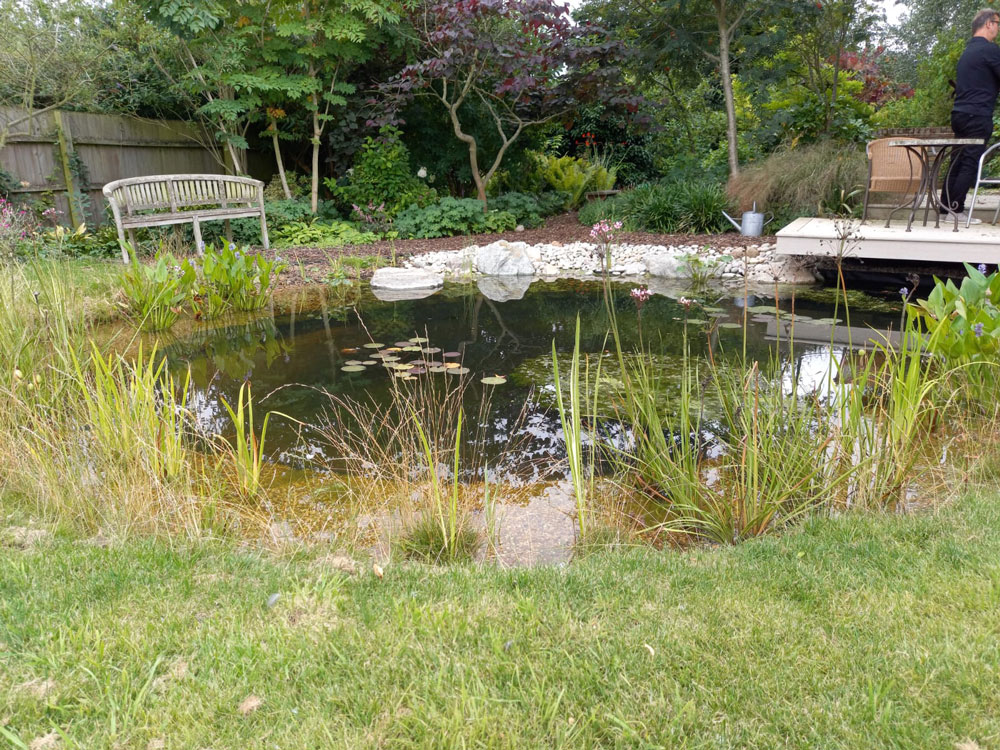
A garden pond is just as valuable for wildlife in winter as it is in summer.
Designing your winter wildlife garden
Before you can start landscaping, you need a garden design. You need to know where each of your features will sit in the garden. And you need to plan how you will get from one to the other.
Will you opt for a contemporary look with straight lines? Or do you prefer soft curves?
Which materials and colour schemes appeal to you most?
Last, but by no means least, what will you plant in your wildlife garden? Remember that you need all year round interest for you and for the creatures you are hoping to attract.
The whole garden also needs to be easy for you to maintain – choose materials and plants wisely!
We thoroughly recommend investing in the services of an experienced garden designer in order to get the best possible all-year-round results from your outdoor space.
Here are our top 10 features for a winter wildlife garden (In no particular order)
- Natural lawn – many species like to forage for insects on the lawn. Blackbirds and thrushes
- Hedge – a great place for overwintering insects and a good windbreak for you too. Native species will supply berries to feed hungry birds in winter.
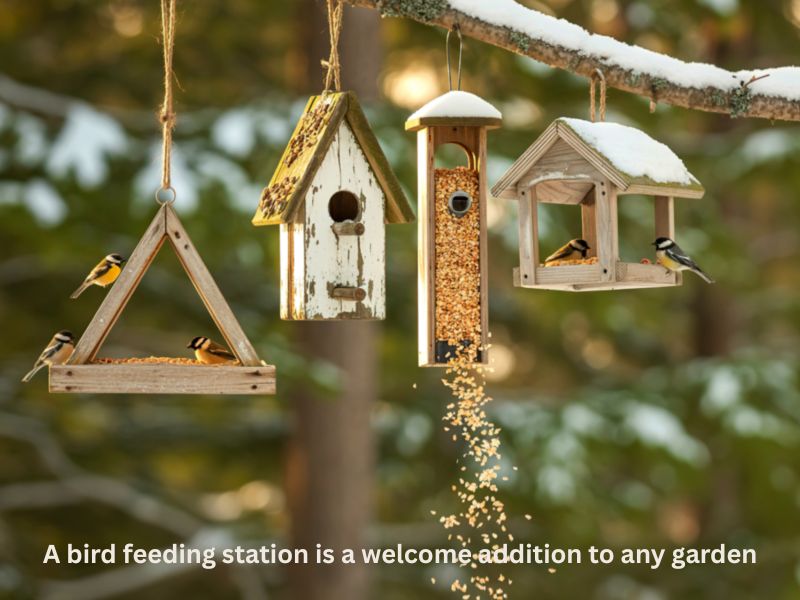
- Bird feeding station – position this on a patio or hard standing with a nice path leading to it. It’s easier to top up the feeders that way plus you can sweep away any spillages that might attract vermin.
- Pond or water feature. It doesn’t have to be huge but a nicely planted water feature will bring all sorts of wonderful creatures to the garden. All living things need water to drink and a wildlife pond supports life all year round.
- Log pile. Placed somewhere discreet, a log pile with different sized pieces of wood provides a fabulous place for insects and molluscs to overwinter. These are the creatures that will bring birds to your garden next spring.
- Tree. Never overlook the importance of trees. They may not look much in the winter but you’ll be surprised at what is nestling in the cracks and crevices. Having somewhere safe to perch and check for danger is vital for birds. Watch how they do a little risk assessment before descending to the feeding station.
- Seating area – for you. A nice sheltered spot where you can sit and listen to the birds. Take a blanket and a hot drink, light the fire pit and enjoy the peace.
- Biodiverse planting beds. Provide a wide range of plants all year round. You can create a lot of interest for yourself with berries, foliage and stems and for insects and birds you’ll be supplying winter food and shelter.
- Compost heap. Instead of throwing all of those grass cuttings, fallen leaves and vegetable peelings in the bin – create your own compost heap. The wildlife will love you for it – and so will your garden when you add lovely rich (FREE!!!) compost to your soil.
Allow plenty of time for your garden to develop
The best winter wildlife gardens take time to develop. Yes, you can certainly do things today that will help birds get through the winter, but if you want to create a true winter wonderland for wildlife, plan ahead. Start by building the garden infrastructure as soon as the weather allows you to. Get paths and patios laid early in the year and then settle in some wildlife friendly plants.
If you want your winter wildlife garden to be spectacular next year – talk to your landscaper this week. Remember – the best landscapers have a waiting list so it’s wise to get in early!
Things you can do today to help winter wildlife
Put out a shallow bowl of water and freshen it up every day – especially on frosty days
Create a bird feeding station with a wide variety of food and feeders
Resist the temptation to tidy beds and borders – some of those hollow stems probably have beneficial insects hibernating in them.
Plant some evergreen shrubs such as laurel or viburnum to provide shelter. If you’re still working on your garden design – these will be perfectly happy in containers.
Contact Katie at Tapestry Design Studios to discuss layouts and planting schemes that will benefit garden wildlife all year round.
Useful links for wildlife gardeners
Contact Holland Landscapes for wildlife garden design and build services
How to save money by planting in winter time
Make sure your winter garden is cheery not dreary
Top 10 winter gardening jobs for indoors and outdoors
Sorry, the comment form is closed at this time.